

The Political Geography of God: Why Northern Nigeria Would Be Buddhist and Western Nigeria Hindu
In the complex tapestry of Nigerian identity, few threads are as fiercely defended or as politically volatile as religion. From the Sharia courts of Kano to the Pentecostal mega-churches of Lagos, faith appears to be a deeply personal, almost primordial force. But is it?
Consider a simple thought experiment. Imagine the 19th-century Sokoto Caliphate was never absorbed into the British Empire. Instead, suppose Chinese traders and colonial administrators established a protectorate over the North. Today, Kano might be known for its serene Buddhist monasteries, the Sultan of Sokoto could be a reincarnated lama, and young Hausa men might shave their heads in ordination ceremonies as Buddhist monks.
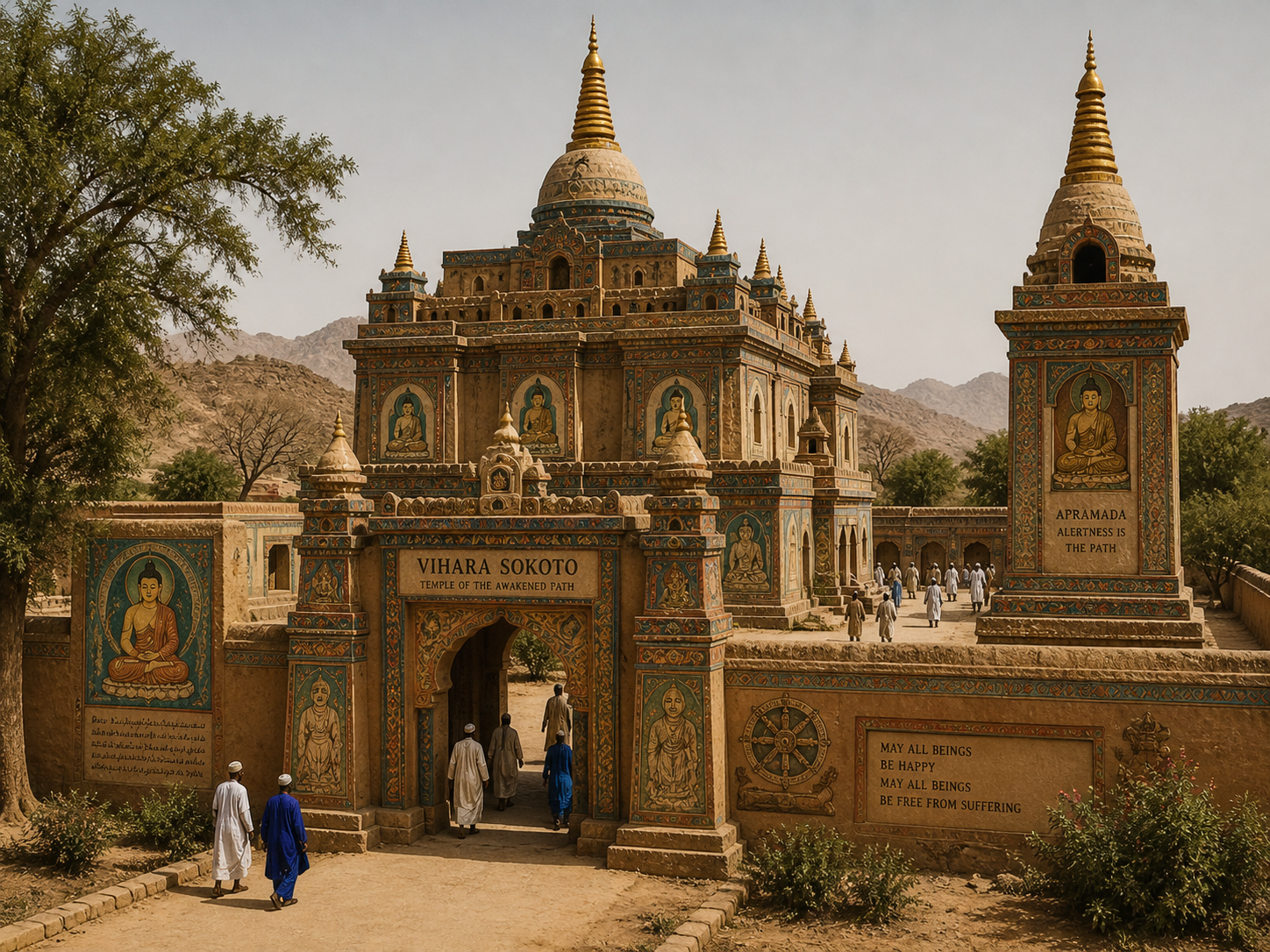
If Chinese colonizers had come instead of the British: a Buddhist monastery in Kano (artist's concept).
Now, take the Western region. Imagine the British never arrived in Lagos. Instead, Indian merchants and colonial officers established dominance in places like Ibadan and Abeokuta. Today, the Yoruba might celebrate Diwali with as much fervor as Eid, temples to Vishnu and Shiva would dot the landscape, and the Ooni of Ife might preside over puja rituals rather than Ogun festivals.
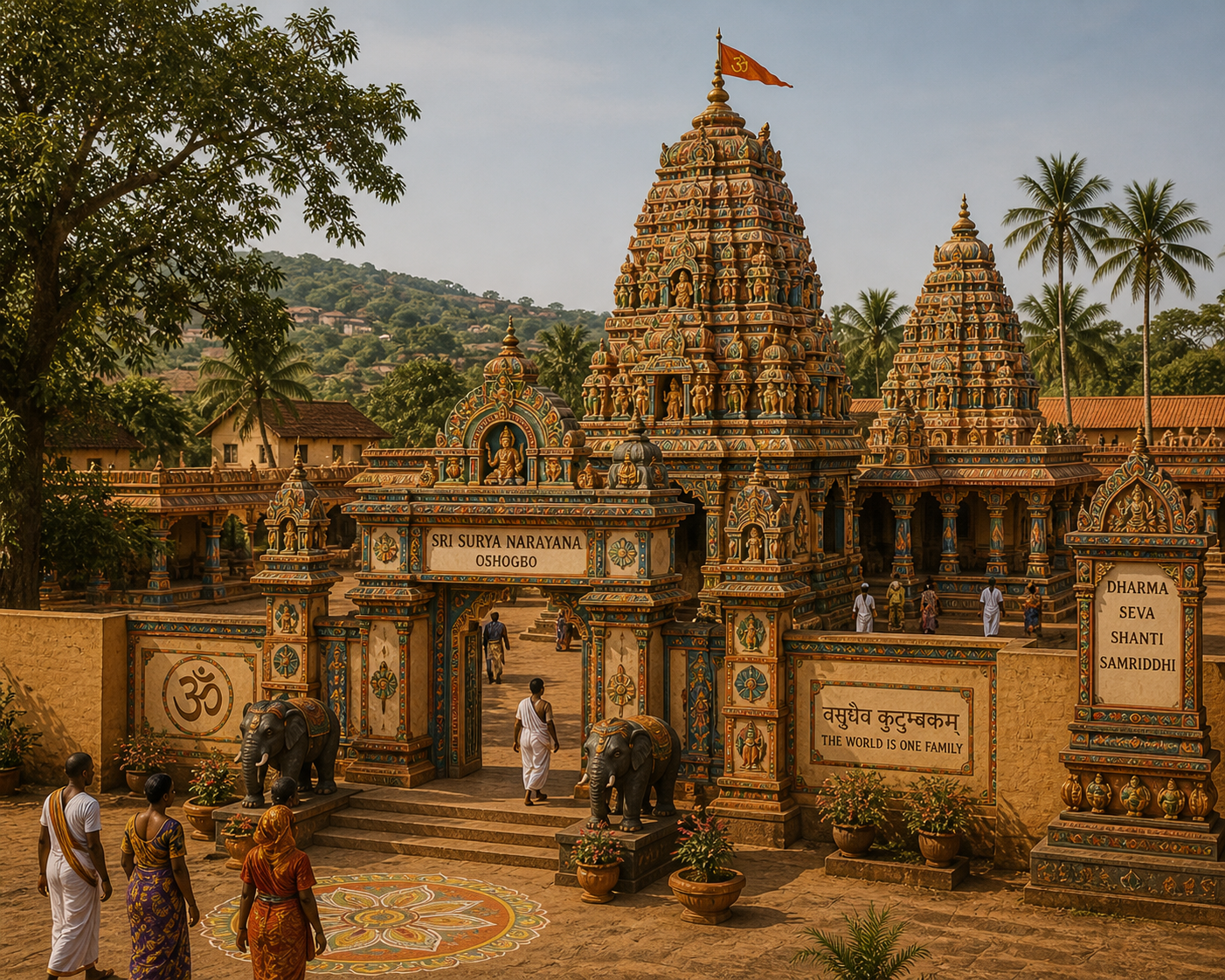
If Indian colonizers had come instead of the British: a Hindu temple in Ibadan (artist's concept).
If the Colonizers Were Different: A Counterfactual Table
Why This Proves Religion is a Political Construct
Your God depends on your postal code. A baby born in Maiduguri has a 99% chance of being raised Muslim. A baby born in Enugu has a 90% chance of being raised Christian. If geographical accident determines faith, it cannot be purely divine choice.
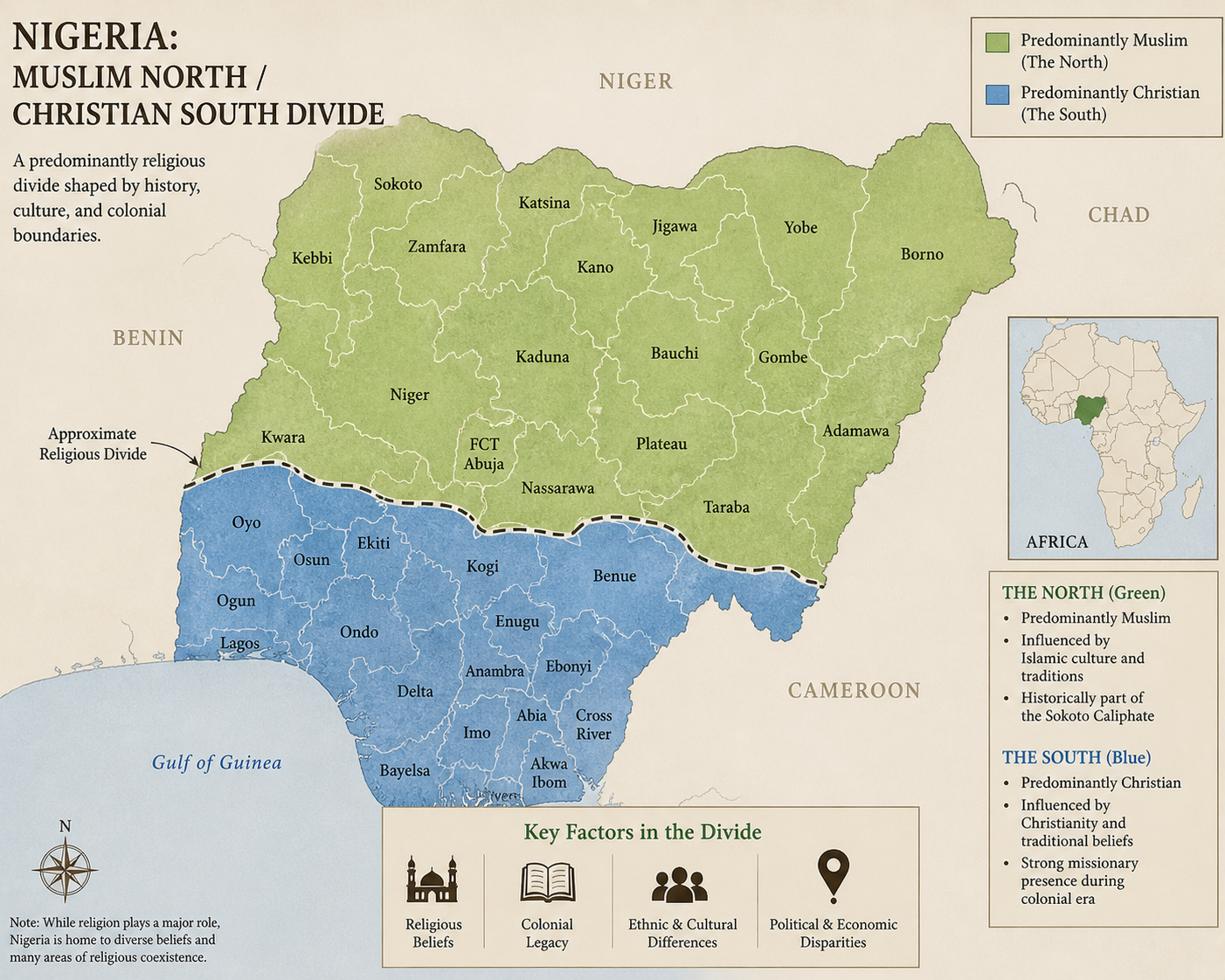
Nigeria's religious map follows colonial boundaries, not divine revelation.
Religious violence is ethnic and political conflict in disguise. When "Muslim" herdsmen attack "Christian" farmers, the fault lines are water rights, grazing routes, and local government control not theology. The religious labels are mobilized for political power.
State recognition of religion is a colonial inheritance. The Nigerian government registers the Nigerian Supreme Council for Islamic Affairs and the Christian Association of Nigeria giving them political legitimacy. No such registry exists for traditional Yoruba or Igbo religions, proving the state decides which "spiritual paths" count.
Conversion rates change with political incentives. During election cycles, politicians conspicuously attend pilgrimages to Mecca or Jerusalem. Their sudden piety is a political tool, not a spiritual awakening.
The Logical Conclusion: Tax Exemption Proves Religion is a Political Construct
If religion were truly divine, tax policy would be identical across all faiths. A church, a mosque, a Buddhist temple, a Hindu mandir, and a Yoruba Orisa shrine would all receive the exact same treatment under law. But in Nigeria, they do not.
Tax exemption is a gift the state can give or take away. Because the Nigerian government can decide which religions are tax-exempt, it holds power over them. You cannot tax or exempt the divine only human institutions. The fact that the state grants exemption proves it views religions as political organizations, not otherworldly kingdoms.
The state already taxes the "commercial arms" of churches and mosques. This shows the state can distinguish between "sacred" and "secular" activities whenever it wants revenue. If the sacred were inviolable, the state would tax nothing a church touches. But it does tax church-owned hotels and bakeries. That means the state decides what counts as "religious enough" for exemption a purely political judgment.
No taxation without neutral representation. Since the state (via colonial history) is responsible for which religion dominates which region, taxing religious institutions would be taxing citizens for a political geography they did not choose. But the reverse is also true: selectively exempting only Christianity and Islam while ignoring indigenous faiths is the state admitting it plays favorites.
Tax exemption levels the playing field only if applied equally. Today, only Christianity and Islam receive de facto subsidies (via pilgrimages, land grants, security protection, and tax exemption). That is not divine favor. That is political engineering.
It reduces conflict. Much of Nigeria's religious tension comes from competition over state resources (which local government funds which pilgrimage, which faith gets land, which leader gets a diplomatic passport). Recognizing tax exemption as a political tool not a divine mystery would force honest debate about why some religions are more "exempt" than others.
Opinion: Stop Pretending Religion is Personal It's a Political Passport
The Chinese and Indian thought experiment proves the point: There is nothing inevitably "Muslim" about the North or "Christian" about the South. If the winds of colonial history had blown differently, we would be burning incense to Buddha or offering coconuts to Ganesha. Does that make Buddhism or Hinduism "false"? Of course not. It simply proves that the geography of God is drawn by human conquerors, not divine architects.
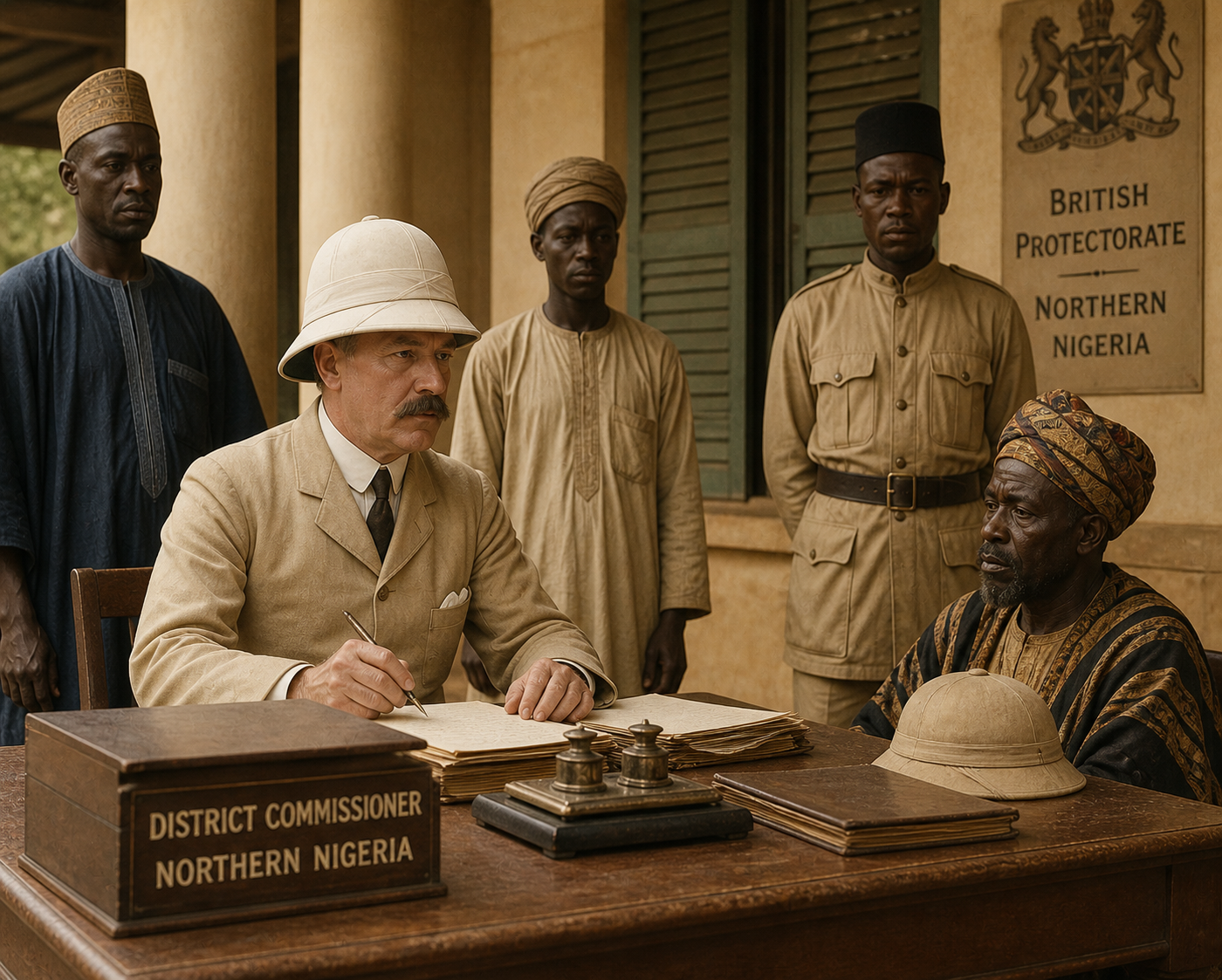
The geography of God was decided by colonial administrators, not divine architects.
And here is the final proof: Tax exemption follows that same geography. Ask yourself if the British had been Chinese, would the Nigerian government today be exempting Buddhist monasteries from tax while asking Christian churches to pay? No. The exemption would flip. That is not theology. That is politics.
Therefore, the Nigerian state must do one of two things:
- Option A: Abolish all official recognition of religion entirely (no pilgrimages, no faith-based school boards, no Sharia or customary courts of appeal, and no selective tax exemption either tax all religious commercial activity equally or exempt none).
- Option B: Grant blanket tax exemption to all religious bodies equally Christianity, Islam, Buddhism, Hinduism, Yoruba Orisa, Igbo ancestors, every single faith and treat faith as a purely private matter that never enters the treasury's ledger except when it runs a hotel.
After all, if the British had been Chinese, we would be asking: "Why doesn't the government subsidize our trip to Lumbini?" And if the British had been Indian, we would be asking: "Why is our temple taxed but the mosque is not?"
→ Read more about Nigerian political history
→ Comments are open below
Written by SolFligh
SolFligh Tech Building intelligent, scalable software solutions across web, mobile, automation, and AI systems.
More from SolFligh BlogComments (0)
No comments yet. Be the first to share your thoughts!