

Why Our Leaders Always Run to London Before Election
There is a spectacle that unfolds before every Nigerian general election, so routine that it has lost its power to shock. Presidential aspirants, men who seek to lead Africa's most populous nation, board flights to London. Their destination is not Buckingham Palace or 10 Downing Street, but Chatham House today an independent, non-profit, non-governmental organization, but originally founded in 1920 as the Royal Institute of International Affairs. There, before a largely British audience, they deliver lectures on what they intend to do in their own country.
The Strange Ritual
The pattern is unmistakable. In February 2015, Muhammadu Buhari delivered a lecture at Chatham House as the opposition candidate. In December 2022, Bola Ahmed Tinubu followed the same path, traveling to London to address the institute about "his missions in the 2023 general elections." John Mahama of Ghana has also used the platform. The topics covered are not primarily foreign policy they are national security, economic strategy, domestic governance. These are conversations that should be happening in Abuja, Accra, or Lagos, before Nigerian and Ghanaian citizens.
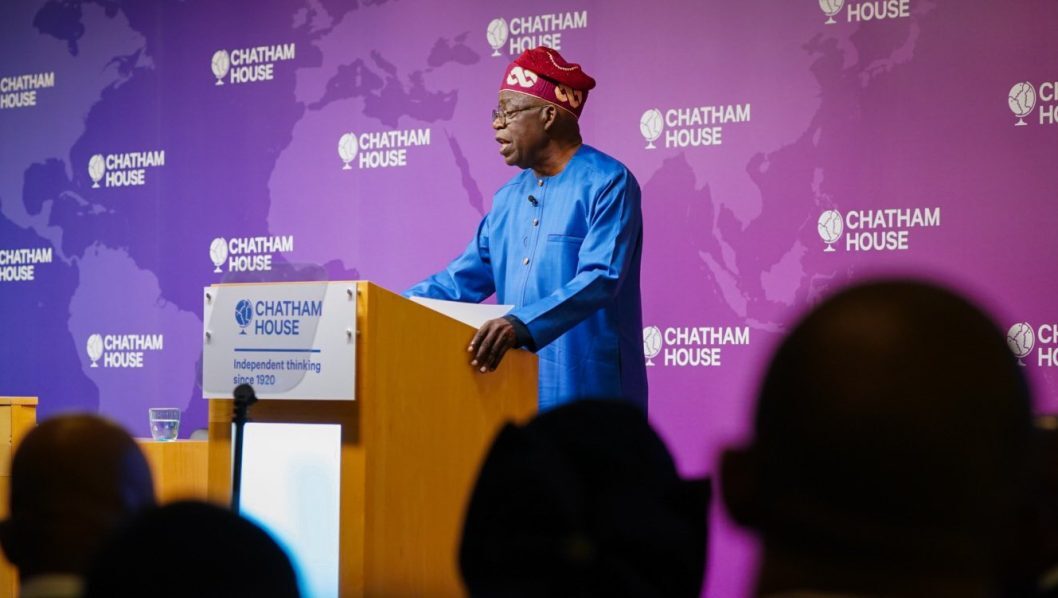
Bola Ahmed Tinubu addressing Chatham House in December 2022 as a presidential candidate. Image: Chatham House / YouTube
Yet the candidates routinely evade locally-organized debates. They make excuses not to face their own people. But London? London they will gladly visit.
The NGO That Governs
Chatham House's defenders will quickly point out that it is no longer a formal arm of the British state. They are correct. Today, it describes itself as an independent, non-profit, non-governmental organization. It receives no direct government funding. Its charter is royal, but its operations are ostensibly private.
This is precisely what makes the phenomenon so revealing. African leaders are not seeking validation from the British government they are seeking validation from British civil society, British academia, the British policy elite. They are voluntarily submitting their domestic political visions for approval by a foreign NGO. No Nigerian law requires this. No treaty demands it. No international obligation compels it. It is purely voluntary deference.
The Colonial Logic Beneath the NGO Veneer
Why does this happen, even when the institution is formally independent? The answer lies in understanding the enduring architecture of colonial relationships, now disguised in the language of independence and non-partisanship.
Chatham House was founded as the Royal Institute of International Affairs, emerging from the Paris Peace Conference of 1919, where British and American delegates sought to formalize Anglo-American dominance in global affairs. Its founding purpose was to shape imperial policy and maintain British influence. Its transformation into an independent NGO changed its legal status but not its institutional culture, its network, or its worldview.
When African leaders speak there, they are not simply participating in an international conference. They are seeking validation from the very network that once designed the colonial system. The NGO label does not erase history.
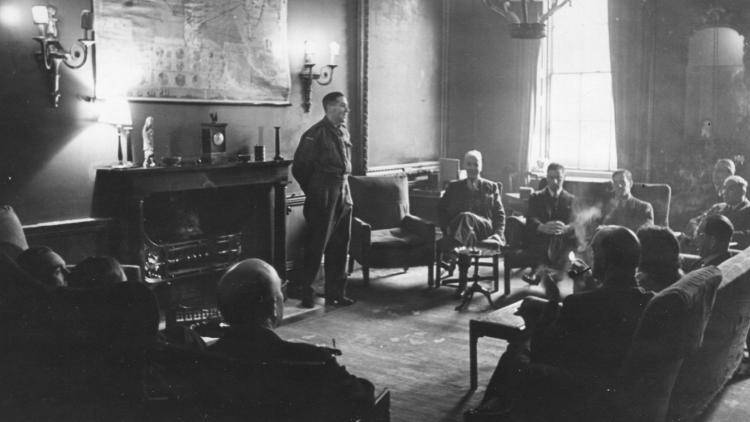
Chatham House in 1920, founded as the Royal Institute of International Affairs after the Paris Peace Conference. Image: Wikimedia Commons
Consider Nigeria's own independent policy institutions. The Nigerian Institute of International Affairs (NIIA) in Lagos is also independent. The Nigerian Institute of Policy and Strategic Studies (NIPSS) in Kuru, Jos, is a non-partisan research body. Yet no presidential aspirant has ever considered them worthy venues for laying out their vision. The message is unmistakable: legitimacy, in the minds of these leaders, still flows through London. A British NGO's approval matters more than a Nigerian NGO's attention.
Beyond Symbolism: The Economic Chain
This deference is not merely symbolic. The same leaders who seek validation at Chatham House return to sign agreements that lock their nations into neocolonial economic relationships. The March 2026 UK state visit provides a recent example. President Tinubu arrived with a retinue of officials and was received with royal pomp. The agreements signed tell the real story: Nigeria agreed to receive deported migrants from Britain at no cost to the UK, and committed to a £746 million port refurbishment deal in which Britain will supply the goods and secure a significant portion of the contract.
The Intellectual Subjugation
Even more troubling is the intellectual dimension. Chatham House does not simply host African leaders it advises them. And its advice, despite its non-governmental status, consistently serves Western interests. In 2025, the institute published analysis urging Nigeria to maintain a weakened naira for "economic competitiveness." This recommendation echoes the Structural Adjustment Programs imposed by the IMF and World Bank in the 1980s policies that devalued currencies, removed subsidies, and liberalized trade, plunging Nigeria into deeper poverty.
As one Nigerian analyst put it, these recommendations are "designed to perpetuate a neo-colonial economic order that benefits foreign interests at the expense of Nigeria's sovereignty." The numbers support this claim. The naira traded at 60 kobo to the dollar in 1980. After decades of Western-prescribed policies it now trades at nearly 1,500 naira to the dollar.
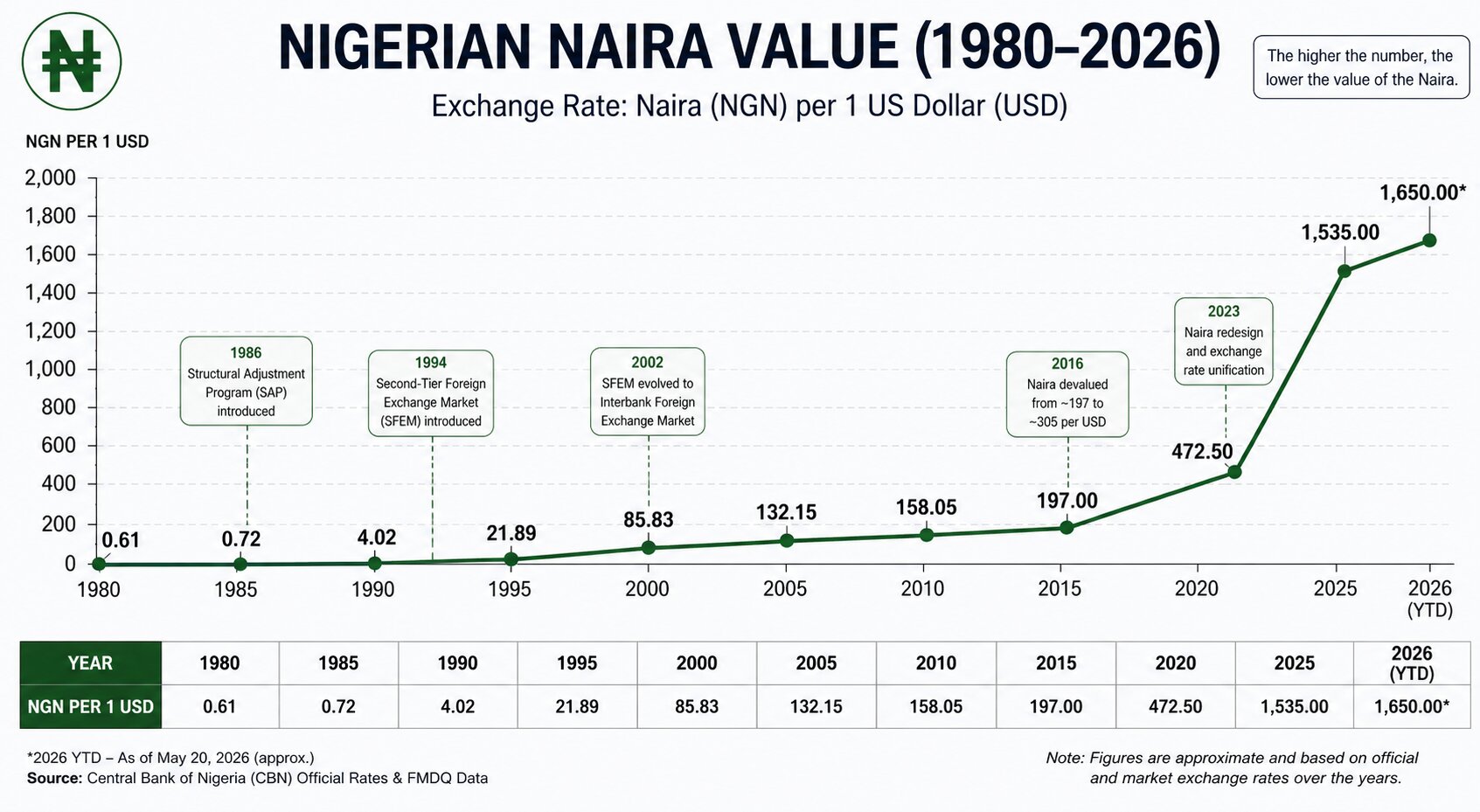
Naira to US dollar exchange rate: 60 kobo (1980) → nearly ₦1,500 (2026). Data: Central Bank of Nigeria
Defending the Practice
Defenders of the practice offer predictable arguments. They claim that Chatham House provides a valuable international platform, that African leaders need to communicate their vision to global investors, that foreign policy matters require international engagement. Some add that because Chatham House is an independent NGO, there is no "colonial" dimension it is merely a respected neutral forum.
But this defense misses the point. The issue is not whether African leaders should engage internationally. Of course they should. The issue is why this particular engagement takes the form of domestic political validation-seeking from a foreign-based NGO one founded by the British establishment, headquartered in London, and staffed largely by British policy experts. Why must an African presidential candidate explain his economic policies to a British NGO's audience before explaining them to his own people? Why is Chatham House treated as the gatekeeper of legitimacy?
The Deeper Captivity
The Chatham House phenomenon is merely the visible symptom of a deeper malady. It reflects what one Nigerian writer has called "the structure of sovereign captivity." The African elite, for all their talk of sovereignty and independence, remain mentally colonized. Their source of power is not indigenous but external. They seek approval where approval should not be required even from NGOs.
That Chatham House is non-governmental actually makes the situation more damning, not less. If African leaders were formally required to report to a British government body, at least that would be a recognizable colonial structure. Instead, they voluntarily submit to an independent British think tank. They have internalized the colonial relationship so completely that no formal coercion is necessary. They run to London of their own free will.
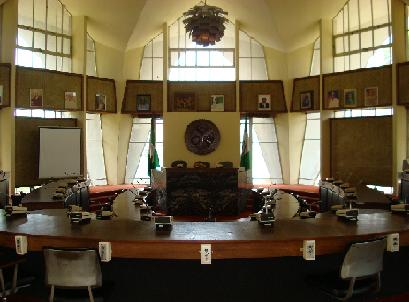
Nigerian Institute of International Affairs (NIIA), Lagos an independent Nigerian NGO that no presidential aspirant has deemed worthy of a policy lecture.
A Way Forward
What is to be done? The solution begins with naming the problem. African leaders must stop treating Western institutions whether governmental or non-governmental as the arbiters of their legitimacy. The Nigerian Institute of International Affairs in Lagos, the Institute of Policy and Strategic Studies in Kuru, and their equivalents across the continent must be strengthened and utilized. Presidential debates must happen at home, before citizens, not in London before NGO audiences.
But institutional reform alone is insufficient. The deeper requirement is psychological decolonization the recovery of confidence that Africans can govern themselves without Western validation, even from independent NGOs. This requires leadership. It requires leaders who will refuse the Chatham House invitation, who will look their own people in the eye instead of seeking approval from a foreign audience.
Conclusion
The African continent is rich in resources, youthful in population, and vast in potential. Its nations have been legally sovereign for over half a century. Yet the ritual continues: the presidential aspirant boards the flight to London, delivers his lecture to the independent, non-profit NGO that was once the Royal Institute of International Affairs, and imagines that he has done something important.
He has done something, but not what he imagines. He has demonstrated that the colonial relationship never truly ended. It merely changed forms. The gunboat has been replaced by the invitation. The governor's mansion has been replaced by the NGO. The proconsul still goes to London not to demand, but to explain. Not to command, but to seek approval.
→ Read more about African sovereignty and economic independence
→ Comments are open below
Written by SolFligh
SolFligh Tech Building intelligent, scalable software solutions across web, mobile, automation, and AI systems.
More from SolFligh BlogComments (0)
No comments yet. Be the first to share your thoughts!