You have met the three houses. You have seen where trauma leads. Now comes the most important question of this entire book:
Is there a fourth way?
Not the Fortress (cold, closed, control). Not the Open Window (flooded, boundaryless, burnout). Not the House of Mirrors (perceptive but predatory).
Is there a house that feels but chooses. That cares but protects. That sees but does not exploit.
Yes. It is called The Third Path. And it is not a destination. It is a practice. Every day. Every choice. Every boundary. Every moment of honesty.
The Third Path is not about becoming perfect. It is about becoming integrated. The child who survived the storm is still inside you. You do not need to kill them. You need to invite them upstairs, give them a blanket, and say: "The storm is over. You can rest now. I will drive."
This chapter is for everyone. The empath who needs to close their window sometimes. The narcissist who needs to open their walls sometimes. The dark empath who needs to choose care over control. This is the chapter where we stop talking about houses and start talking about home.
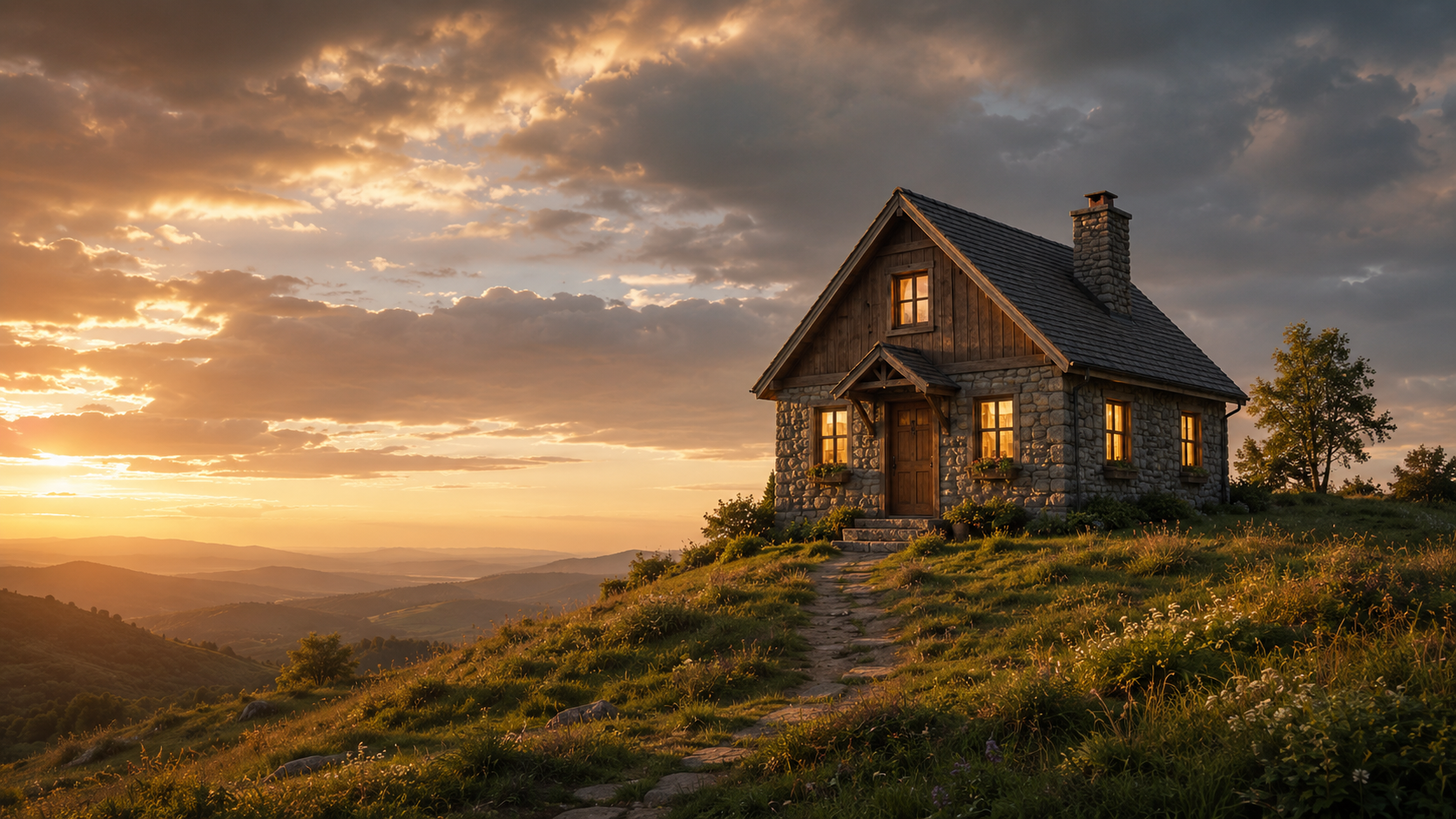
Meet Elena. Elena is 42. She is not Sarah (the burned-out empath). She is not James (the collapsed narcissist). She is not Marcus (the dark empath). Elena used to be all three at different times, in different seasons.
Elena at 22: She was The Open Window. She gave everything to everyone. She stayed in an abusive relationship for four years because she "felt his pain." She dropped out of college to take care of her depressed mother. She had no boundaries. She was exhausted by 25.
Elena at 28: She swung the other way. After her relationship ended badly, she became a Fortress. She cut everyone off. She was cold at work. She told herself: "Feelings are weakness." She dated no one. She trusted no one. She was safe and desperately lonely.
Elena at 34: She discovered the Dark Empath within herself. She was still perceptive she could read anyone. And for a while, she used it. She manipulated her boss into a promotion. She seduced and discarded a coworker who loved her. She felt powerful. She also felt nothing. The nothing started to scare her.
Elena at 38: She started therapy. Not because she was "broken" because she was exhausted from being three different people. She asked her therapist: "Which one am I supposed to be?"
Her therapist said: "None of them. Stop being a house. Start being a person who chooses, moment by moment, who you want to be."
Elena today (42): She is not one house. She is a person with tools. When someone pushes her boundaries, she does not collapse (Open Window) or explode (Fortress). She says: "That doesn't work for me." When someone cries, she does not absorb their pain (Open Window) or dismiss it (Fortress) or catalog it (Dark Empath). She asks: "Do you want me to listen, to help, or to sit with you?"
Elena still feels everything. She just no longer drowns in it. She still protects herself. She just no longer imprisons herself. She still sees people clearly. She just no longer uses what she sees as a weapon.
Elena walked The Third Path. Not by becoming perfect. By becoming conscious.
The Third Path is not a personality type. It is a set of practices. Anyone can learn them whether you started as a Fortress, an Open Window, or a Dark Empath.
The Four Pillars of The Third Path:
The Third Path is not a destination you arrive at. It is a muscle you build. Every day. Every small choice. Every time you pause instead of react. Every time you feel without drowning. Every time you care without controlling.
I am not my trauma. I am the one who survived it.
I am not my coping mechanisms. I am the one who can choose new ones.
I am not a house with one door. I am an architect with many tools.
I will feel without drowning. I will protect without imprisoning. I will see without exploiting.
I will pause before I react. I will ask before I assume. I will apologize when I am wrong.
I will not be perfect. I will be honest.
I will not be fixed. I will be growing.
I will not be one thing. I will be the one who chooses, moment by moment, who I want to be.
This is The Third Path. It is not easy. It is worth it.
For one week, before you respond to anything emotional a text, a criticism, a request, an argument wait ten seconds. Breathe. Count slowly: 1... 2... 3... to 10.
Then ask yourself one question: "What does the healed version of me do here?"
Not the traumatized version. Not the reflex. The version who has already walked The Third Path. What would they do? Do that. Even if it feels fake. Even if it feels slow. The pause creates space. Space creates choice. Choice creates healing.
Inside you live three versions:
- The Wounded Child (who just wants to be safe)
- The Protector (who built the walls or the open window or the mirrors)
- The Witness (who can see both without becoming either)
Sit down with a journal. Interview each one.
Ask the Wounded Child: "What do you need?" (The answer is never "more control." It is usually "to be seen, to be held, to be told I am safe.")
Ask the Protector: "What are you afraid will happen if you stop?" (The answer is always annihilation. "I will die. I will be nothing. I will be hurt again." Thank the Protector. They kept you alive. Then tell them: "You can rest now. I am grown. I can protect us.")
Ask the Witness: "What do you see that the others cannot?" (The Witness sees the truth: you are not broken. You are adapting. And you can adapt again.)
Do this exercise once a week for a month. You will meet yourself in ways you never have.
Every night, before sleep, answer three questions:
1. When did I feel today? (Not "should I have felt?" Just: when did feeling happen?)
2. When did I protect myself? (A boundary. A no. A pause. Did I protect? Or did I imprison?)
3. What would I do differently tomorrow? (Not punishment. Just one small adjustment.)
This is not a shame exercise. This is a training exercise. You are training your brain to notice, to choose, to integrate. After 30 days, you will not recognize the person you used to be.
Think of one person in your life who feels safe not perfect, just safe. Someone who respects your no, who does not drain you, who sees you without using you.
Write them a letter. Not to send (though you can). Write: "Thank you for being safe. Here is what safety feels like to me: [describe it]. Here is what you do that helps: [list it]. Here is what I am learning about myself because of you: [name it]."
This exercise does two things: it reminds you what safety feels like (so you can recognize its absence elsewhere), and it strengthens your ability to receive care (which is often harder for empaths and narcissists than giving it).
If you started as The Open Window (Empath): Your healing is learning to close your window sometimes. To say "not now." To feel without drowning. To protect your fire so it can warm the right people.
If you started as The Fortress (Narcissist): Your healing is learning to open a small door. To let one person in. To sit with your own shame without running from it. To discover that vulnerability does not kill you it introduces you to yourself.
If you started as The House of Mirrors (Dark Empath): Your healing is learning to turn the mirror around. To look at yourself instead of reflecting others. To ask "Who am I when no one is watching?" and to care about the answer. To choose kindness when you would rather win.
If you are already walking The Third Path: Your healing is staying on the path. Helping others without rescuing them. Protecting yourself without isolating. Seeing clearly without manipulating. Every day is practice. Every day is new.
1. If I had to name the house I was born into (Open Window, Fortress, or House of Mirrors), which would it be? No judgment. Just naming.
2. What is one small thing I did today that was different from my old pattern? (Even tiny. Even accidental. Even just thinking about it.)
3. What is the hardest part of The Third Path for me? (Feeling without drowning? Choosing instead of reacting? Holding both good and bad about myself?)
4. Who is one person who walks The Third Path well? What can I learn from watching them?
5. If I looked back at myself one year from now, what would I hope to see? (Not perfection. Just one degree of change.)
The Third Path is not about arriving. It is about walking. Some days you stumble. Some days you run. Some days you stand still and breathe. All of it counts. All of it is healing.
Summary Lesson: The Third Path is not a destination. It is a practice. It is the pause between the trigger and the reaction. It is the choice to feel without drowning, to protect without imprisoning, to see without exploiting. It is the daily work of becoming integrated not perfect, not fixed, not one thing but whole. You do not have to be The Fortress. You do not have to be The Open Window. You do not have to be The House of Mirrors. You can be the architect. You can rebuild. Not overnight. Not alone. But you can. The Third Path is waiting. Take one step. Then another. That is how home is built.