This chapter is not for everyone. Most narcissists will never read it. Most will skim it, dismiss it, or use it to diagnose someone else. If that is you, put the book down. Come back when the loneliness is louder than your pride.
But if you are a Fortress or someone with strong narcissistic traits and something in you whispers "I don't want to be this way anymore" then stay. This chapter is for you.
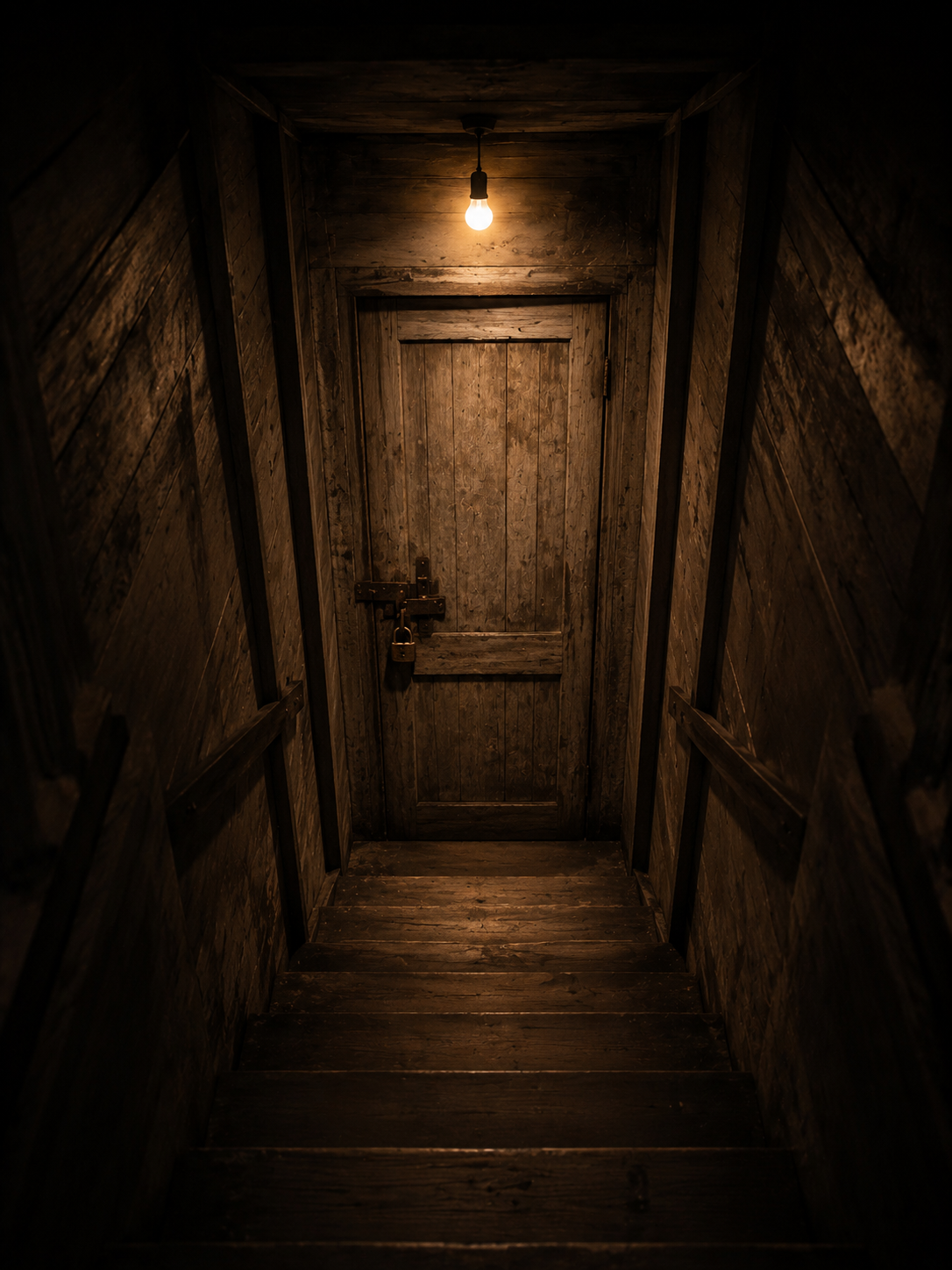
Deep inside every Fortress, there is a basement. You have never gone down there. The door is locked. You threw away the key years ago. Behind that door is everything you buried: the shame, the fear, the small child who was hurt so badly they decided to never feel again.
In that basement, there is a mirror. You have never looked into it. You cannot. Because if you did, you would see the truth: you are not a monster. You are a wounded child who learned to become unbreakable by becoming unreachable.
This chapter is about going into the basement. It will be the hardest thing you have ever done. It will be worth it.
Remember James from Chapter 1? The regional manager who humiliated his employees? The husband whose wife was afraid of him? The man who had no friends and filled his emptiness with whiskey?
James did not change because someone begged him to. He changed because he ran out of people to blame.
The breaking point: His wife left. She did not scream. She did not threaten. She just packed a bag and said: "I am not afraid of you anymore. I am just tired. Goodbye, James."
He expected anger. He could fight anger. But she gave him silence. That silence was louder than anything.
For three months, James lived alone. He drank more. He worked later. He tried to find someone new someone who would admire him. But everyone he met seemed to sense something was wrong. They left quickly.
The first crack: One night, drunk and alone, James looked in his bathroom mirror and said out loud: "I don't even like myself." He froze. He had never admitted that. Not even to himself.
He did not get better overnight. He got worse first. He raged. He blamed his ex-wife. He blamed his mother. He blamed the world. But the question would not leave: "If everyone leaves, maybe I am the problem."
The second crack: He found a therapist who specialized in narcissistic personality disorder. Not because he wanted to change because he wanted to prove the therapist wrong. The therapist did not argue. He just asked questions James could not answer. "When was the last time you felt genuinely happy?" "What are you afraid will happen if you apologize?" "Who were you before you learned to be hard?"
The third crack: James cried for the first time in 28 years. He was alone. It was 2 AM. He was watching a movie a stupid movie about a father and son. Something broke open. He sobbed. Not for the characters. For himself. For the boy he used to be.
Healing for a narcissist is not about becoming an empath. It is about becoming real. It is about going into the basement, picking up the mirror, and looking at the child who has been locked there for decades.
Here is what most people do not understand about narcissism:
The stages of narcissistic healing (if you are brave enough):

This will take one hour. Do not rush it.
Write down every person you have hurt. Not what they did to you. Just their names. Your ex-wife. Your ex-friends. Your employees. Your children. Your siblings. Write them all.
Now, next to each name, write one specific action you took that hurt them. "I yelled at her in public." "I lied about him to our friends." "I ignored my daughter's birthday."
Do not justify. Do not explain why you did it. Just write the action.
When you are done, read the list out loud. Say: "I did these things. These are real. These people did not deserve this."
If you feel shame, good. Shame is the lock. Feeling it is the key turning.
Choose one person from your list. Write them a letter. In this letter, you will:
- Acknowledge what you did (no minimizing)
- Say "I was wrong" (no "but")
- Say "You did not deserve that"
- Say "I am not asking for forgiveness. I am telling the truth."
Do not send it. Burn it. The point is not to burden them. The point is to admit the truth to yourself.
When you can write this letter without defending yourself, you are healing.
After you have written (and burned) three letters, you will deliver one apology. In person or on the phone. Not by text.
Choose someone who is safe someone who will not use your apology to hurt you back. This is not about their reaction. This is about your ability to say "I was wrong" without running away.
Script: "I have been thinking about [specific thing I did]. It was wrong. You did not deserve it. I am sorry. I am not asking for anything. I just wanted you to know that I know."
Then stop. Do not ask for forgiveness. Do not ask for another chance. Do not explain. Just apologize. Let them respond however they respond. Your job is only to tell the truth.
This will be the hardest thing you have ever done. It will also be the thing that sets you free.
For 90 days, you will not seek supply. No social media likes as validation. No new romantic partners. No dominating conversations. No making yourself the center of attention.
What you will do instead: Sit in silence. Go to therapy. Join a support group for narcissistic traits (they exist). Read books about shame and vulnerability. Let yourself be bored. Let yourself be small. Let yourself be no one special.
The first 30 days will feel like withdrawal. You will itch for attention. Do not give in. The second 30 days, you will feel empty. That emptiness is the basement. You have to sit in it. The third 30 days, you might hear a small voice your real voice. The one you buried. Listen to it.
Every Sunday night, answer these three questions:
1. Did I manipulate anyone this week? (Be honest. Small manipulations count.)
2. Did I take accountability for anything?
3. Did I feel a genuine emotion that was not anger or pride?
If the answer to #1 is yes, you have work to do. If the answer to #2 is no, you are avoiding. If the answer to #3 is no, you are still dissociating.
This is not about perfection. It is about awareness. You cannot change what you will not see.
You will think: "I read this. I am healed now. Everyone else is the problem." You are not healed. Reading is not doing.
You will want to send this chapter to your ex and say "See? You were a narcissist too." Do not. That is your disease talking.
You will want to skip the exercises and just feel good about yourself for getting through a hard chapter. That is avoidance.
Healing for a narcissist is not about feeling better. It is about getting better at feeling. The shame, the grief, the loneliness those are not punishments. Those are doorways. Walk through them. Not around.

1. What would I lose if I stopped pretending to be perfect? (Be specific. Your marriage? Your reputation? Your identity?)
2. Who was I before I learned to be hard? What did I love? What made me cry?
3. What is one small truth I have been hiding from myself? (Start tiny. "I am lonely." "I am afraid." "I am tired.")
4. If I apologized to one person tomorrow genuinely, without defense what is the worst that could happen? What is the best?
5. Am I ready to change? Not "want to." Ready. Because wanting is passive. Ready means doing the exercises. Ready means sitting in the basement. Ready means becoming someone new.
The child in the basement has been waiting for you for decades. They are not angry. They are not vengeful. They are just waiting. Go down the stairs. Look in the mirror. Stay a while. You are not too far gone. You are just far enough to finally turn around.
Summary Lesson: The Fortress is not evil. The Fortress is a child who learned to survive by disappearing. But survival is not living. Grandiosity is not joy. Control is not love. If you are a narcissist who wants to change, the path is simple not easy, but simple. Go into the basement. Pick up the mirror. Look at the child you locked away. Apologize to the people you hurt not for them, for you. Sit in the shame until it becomes grief and the grief becomes honesty and the honesty becomes something that looks like a real self. You can change. But only if you stop pretending you have nothing to change.