There is a question every burned-out empath eventually asks:
"Do I have to become a Fortress to protect myself?"
The answer is no. But the answer is also not "stay an Open Window."
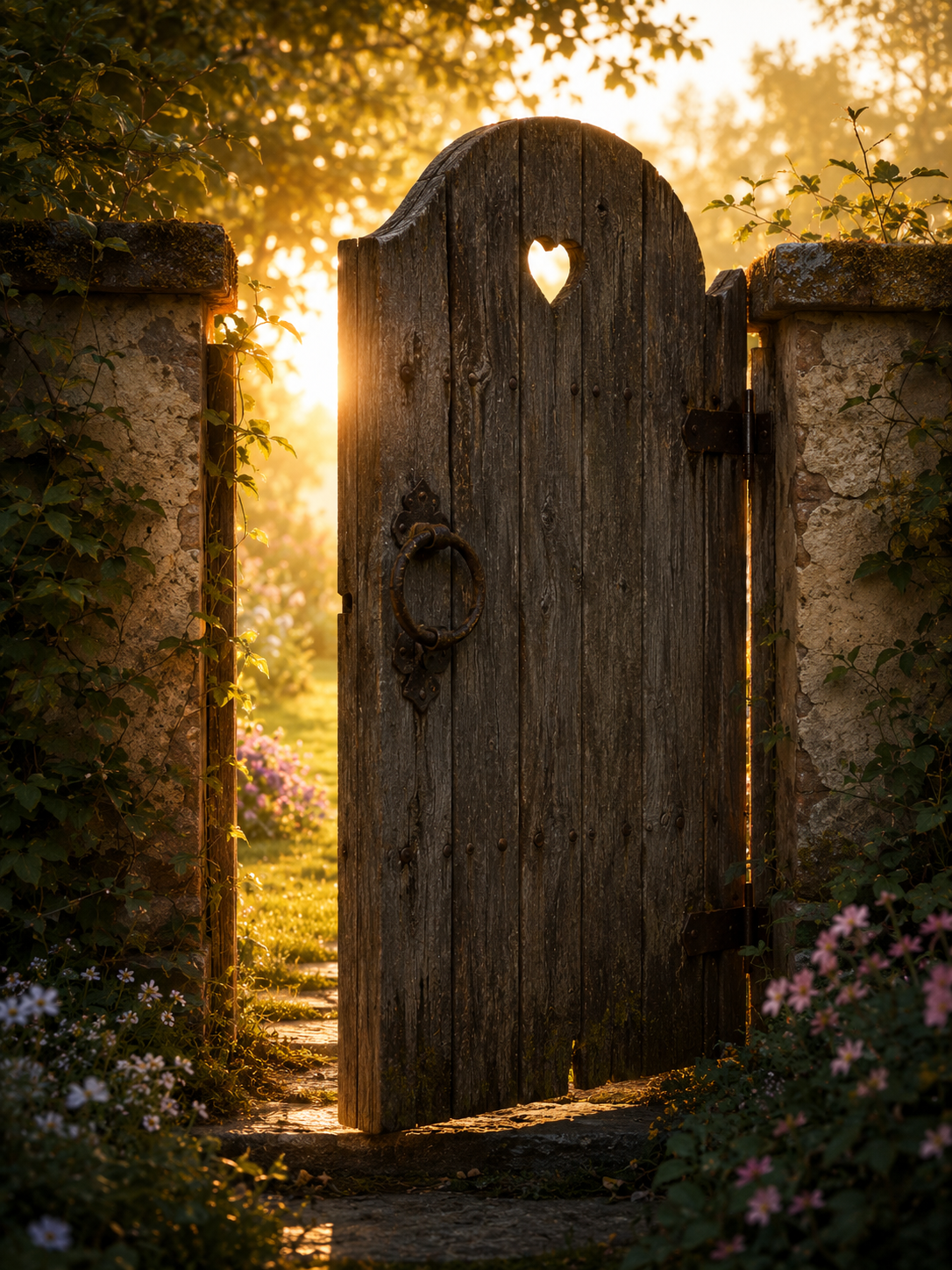
There is a third way. It is not a wall. It is not an open window. It is a gate.
A gate is not a wall. A wall says: "No one enters. Ever. I am safe because I am alone." A gate says: "You may enter. But only when I open. And only for as long as I choose."
A gate has a lock. The lock is not cruelty. The lock is discernment. You keep the key. Not to punish others. To protect the garden inside.
This is the hardest lesson for The Open Window: Boundaries are not walls. Boundaries are love for yourself and for others. Without a gate, you cannot let anyone in safely. Without a gate, you are not a sanctuary. You are a sidewalk.
Remember Kemi? The burned-out nurse who had nothing left? After months of numbness, she finally went to therapy. Her therapist said something that changed her life:
"Kemi, you were never too sensitive. You were too open. There is a difference. Sensitivity is a gift. Openness without boundaries is self-destruction."
Kemi learned to build a gate. Slowly. Painfully. Awkwardly.
First try: A coworker asked her to stay late for the third night in a row. Kemi said: "I can't tonight. I need to go home." Her hands shook. She felt guilty for two hours. But she went home. She slept. The next morning, the coworker was fine. The world did not end.
Second try: A friend called to complain about her boss for the 45th time. Kemi said: "I love you, but I don't have the energy for this right now. Can we talk about something else?" The friend paused. Then laughed. "I didn't even ask how you are," she said. "I'm sorry." They talked about Kemi for the first time in years.
Third try (hardest): Her mother called with a crisis. Another one. Kemi said: "Mom, I can't be your therapist anymore. I love you. But I need you to call a professional. I'm your daughter, not your emotional dumpster." Her mother was angry. Silent. Then, weeks later, she apologized. "You were right," she said. "I was using you."
Kemi did not become cold. She did not become a Fortress. She became a house with a gate. She still felt everything. But she stopped letting everyone in. She kept the key.
Boundaries are not natural for empaths. Their trauma taught them that boundaries were dangerous. As a child, saying "no" might have meant abandonment, rage, or punishment. So they learned: "My safety depends on saying yes."
But as an adult, the rules have changed. The people who rage when you say "no" are not safe people. And the people who respect your "no" are the only ones who deserve your "yes."
What boundaries are:
What boundaries are NOT:
The paradox: Boundaries actually improve relationships. When you have a gate, you can let people in without resentment. You can give from abundance, not from empty obligation. The people who stay will be the ones who respect your gate. The people who leave were only there because you had no door.
You are ready to build a gate if: You feel exhausted after most social interactions. You have said "it's fine" when it was not fine. You have a list of people who "need" you but no one you can call when you need help. You feel guilty when you rest. You cannot remember the last time you said "no" without explaining.
You are not ready if: The idea of a boundary makes you feel physically ill. That is okay. Start smaller. A boundary can be as small as "I will not answer texts after 9 PM." You do not have to tell anyone. Just do it. The practice comes before the confidence.
1. The Physical Gate: Your body, your space, your time. "I do not want to be hugged right now." "I am leaving at 8 PM." "I need to eat alone." No explanation required.
2. The Emotional Gate: What you will and will not carry. "I cannot listen to this right now. I am too full." "I love you, but I will not be yelled at." "Your feelings are yours. I will not rescue you."
3. The Conversational Gate: What topics are off-limits. "I will not discuss my weight." "I will not listen to you criticize my partner." "If you bring that up, I will leave the room." Then follow through.
4. The Relational Gate: Who gets access to your life. "I am taking a three-month break from this friendship." "You cannot call me after 10 PM unless someone is dying." "If you lie to me again, we are done."
This week, pick ONE gate. Just one. Practice it once. Then twice. Then it becomes a habit. You do not have to fix everything at once.
Most empaths over-explain their "no" because they are afraid of disappointing people. Stop.
Template for a perfect boundary:
"Thank you for asking. I cannot do that right now. I hope you find someone who can."
That is it. No excuse. No apology. No "I'm so sorry but..." Just no.
Practice this script out loud five times today:
"No, that doesn't work for me."
"I am not available for that."
"I need to take care of myself right now."
"I will not discuss this further."
"I said no. Please respect that."
Say them in the mirror. They will feel fake. Say them anyway. Your voice will learn.
Draw three circles on a piece of paper:
Inner circle (the hearth): People who respect your boundaries, give as much as they take, and make you feel safe. These people get unlimited access because they have proven they deserve it.
Middle circle (the garden): People who are trying. They sometimes push, but they apologize. They sometimes take, but they give back. These people get limited, conditional access. You are watching to see if they can stay.
Outer circle (the gate): People who drain you, disrespect your no, or only take. These people do not enter. They can stand outside the gate. They can knock. You do not have to answer.
Now move one person this week. One person who belongs in a different circle. Move them. Write their name in the new circle. You do not have to tell them. You just have to know. That is your gate.

You are afraid that if you build a gate, you will become the Fortress. You will not.
The Fortress has no windows. The Fortress feels nothing. You will still feel everything. You will just stop bleeding for everyone who asks.
There is a difference between being kind and being a doormat. A doormat is not kind. A doormat is a survival strategy from childhood. It kept you safe then. It is killing you now.
Your gate will not make you cruel. It will make you available for the people who actually deserve your warmth.
The people who get angry at your gate? They were never standing in your garden. They were standing on your neck.
Close the gate. Keep the key. The right people will wait. The wrong people will leave. That is not loss. That is filtration.
With love,
The version of you who is already learning to say no
1. Where in my life do I have no gate at all? Who walks in whenever they want, however they want?
2. What is one small "no" I can practice this week? Just one. Write it down. Then do it.
3. Who is in my inner circle (the hearth)? Who deserves unlimited access? Who have I been letting in who belongs outside the gate?
4. If I built a gate tomorrow, who would be angry? What does that tell me about them?
5. What would my life look like in one year if I kept the key?
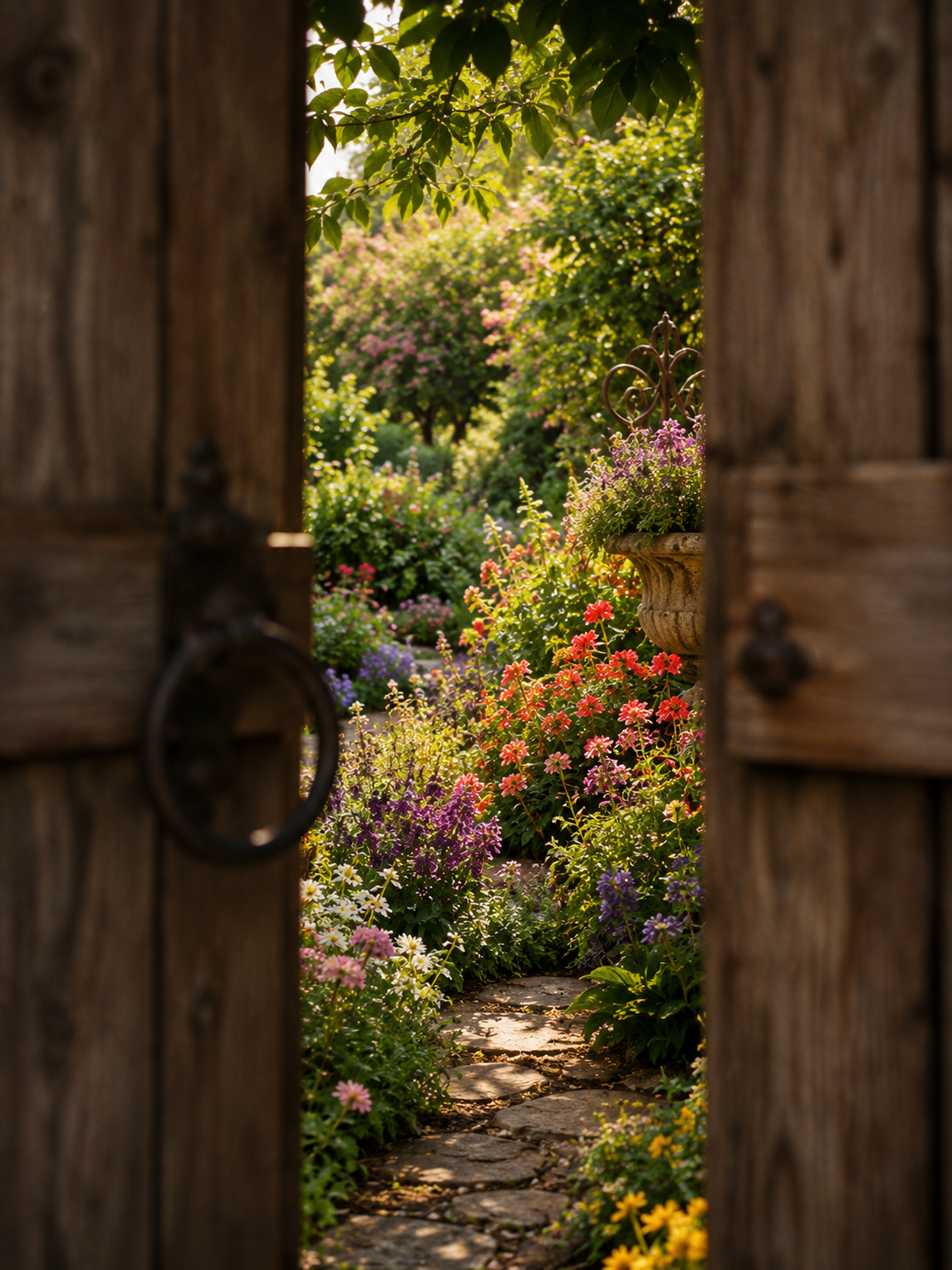
You are not a public park. You are a private garden. The gate is not cruelty. The gate is how you stay blooming.
Summary Lesson: The Open Window does not need to become The Fortress to survive. She needs to become a house with a gate. A gate lets you choose. A gate lets you protect. A gate says "not now" without saying "never." You keep the key. Not to keep people out forever to let them in when you are ready, when they are safe, when you have something to give. Boundaries are not walls. Boundaries are love with a spine. Build your gate. Keep your warmth. Just add a lock that only you control.